Animal Hunter: Wild Shooting
- 4.8
- Rating
- 50.00M
- Installs
- Free
- Price
 Analysis by App-foxy
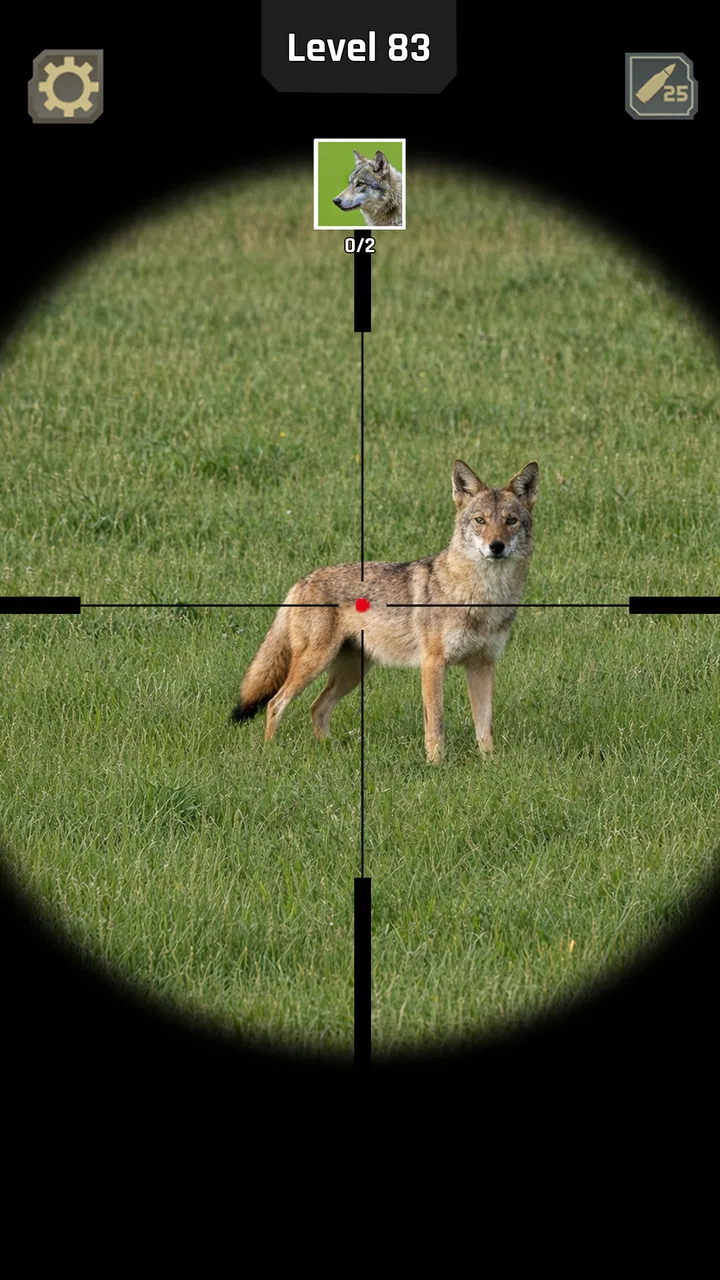
Animal Hunter: Wild Shooting is the kind of action game I open when I want a quick burst of aim-and-react gameplay rather than a long story or a complicated role-playing system. I play as a hunter facing animal targets, and the main appeal is the direct feeling of lining up a shot, reacting quickly, and trying to improve the next attempt. It is built by Fun Fun Studio, available as a free game, and aimed at Teen players.
That simple premise is also the reason I think it will appeal to a particular audience. If you enjoy hunting-themed shooters, short sessions, and the satisfaction of improving your accuracy, there is an easy entry point here. If you want a realistic hunting simulation, a deep campaign, or a competitive multiplayer experience where every player works under the same conditions, this is probably not the first game I would choose. My experience with it is best understood as a focused arcade-style action game with a hunting theme.
What the shooting loop feels like in practice
The first thing I noticed is how quickly the game gets to its central activity. There is no need to learn an elaborate control system before understanding the objective: watch the target, place the shot, and make the moment count. That makes it suitable for short breaks. I can imagine playing a few rounds while waiting for an appointment, then putting it away without needing to remember a large map or a complicated chain of missions.
You May Also Like

 Blood Strike: 2.5 Anniversary
Blood Strike’s Loadouts Turn Every Drop Into a Tactical Gamble
A close look at Blood Strike’s custom loadouts: how fast access to signature weapons reshapes its battle royale rhythm, rewards preparation, and narrows the gap between fights.

 Pandora - Music & Podcasts
Pandora’s Music Is Easy to Start, but Harder to Recover
Pandora’s strength is its low-effort path from a seed to a station. Its weak spot is how much confidence it asks you to place in connection, setup, and quiet recovery.

 8 Ball Pool
 Is Built on Rivalries, Rematches, and Routine
A close look at the rivalries, rematches, shared routines, and unanswered safety questions that turn a quick pool match into a persistent mobile community.

 Samsung Music
’s Quiet Strength Is Playing What You Already Own
Its reach comes less from spectacle than from dependable access to a personal library. That simplicity is both the app’s strongest retention engine and its ceiling.

 AccuWeather: Weather Radar
AccuWeather Review: A Quick, Clear Forecast for Everyday Decisions
For everyday plans, the best forecast is the one you can understand quickly. AccuWeather makes rain timing, radar, and local conditions easy to act on, with a few trade-offs.

 Hill Climb Racing
Why Hill Climb Racing Still Turns Crashes Into One More Run
A tiny car, a bumpy hill and one more upgrade: Hill Climb Racing keeps resurfacing because its simple chaos makes every near-miss feel personal.
More From Our News Desk



The challenge comes from turning a simple action into a consistent one. A rushed shot may be less satisfying than waiting for a cleaner opportunity, while waiting too long can make the moment harder to manage. That small tension gives the game more substance than simply tapping whenever an animal appears. I found myself paying attention to timing and positioning instead of treating every encounter as an automatic win.
The most useful habit is to treat each shot as a decision, not just a tap. I would recommend watching the target’s movement for a moment before firing, especially when the screen feels busy. This helps reduce wasted attempts and makes progress feel connected to player improvement rather than random luck.
The hunting theme gives the action a clear identity, but the game is still primarily about shooting accuracy. Players who dislike animal-hunting themes should take that seriously before installing it. The Teen content rating also makes it a better fit for older players and families who are comfortable with action involving hunting targets.
Why short sessions work well
One of the strongest practical qualities is its pick-up-and-play nature. I do not need to reserve a full evening for it. A short session can still have a purpose: practicing aim, trying to complete a difficult encounter, or simply relaxing with a familiar control loop. That makes it more convenient than larger action games that demand long matches or extensive preparation.
A realistic everyday use case would be a player using it during a commute break or after work when they want something active but not mentally heavy. The game can occupy that middle ground between a completely passive time-filler and a demanding competitive title. I would not use it when I wanted a rich narrative, but I would consider it when I wanted immediate interaction.
There is a trade-off, though. A focused loop can become repetitive if the player needs constant novelty. The appeal depends on whether improving shots remains rewarding after the initial discovery period. Someone who quickly loses interest in repeating similar actions may find the experience less engaging over time than a story-driven action game or a broader hunting simulation.
Progress feels better when accuracy leads the way
My preferred approach is to focus on reliable shots rather than rushing through every encounter. Even when the game encourages fast reactions, accuracy gives the session a clearer sense of purpose. I would start by learning how targets move, then adjust my timing instead of immediately looking for ways to speed everything up.
This is also where the game can test patience. A player who fires impulsively may feel pressure when attempts do not go as planned. Rather than responding by spending immediately, I would first repeat the section and look for a better rhythm. That is a useful distinction: difficulty should encourage learning, while spending should remain a choice rather than the automatic answer to frustration.
The current version is 4.9.4, and the game supports devices running Android 8.1 or later. That gives Android users a clear compatibility check before downloading. I would still make sure the device has enough free space and that the controls feel comfortable on its screen, because touch-based aiming can be more demanding on a smaller display.
Spending, progress pressure, and what I would watch
Animal Hunter: Wild Shooting is free to download, but it includes in-app purchases ranging from $0.99 to $22.99 per item. That is the most important spending context for a new player. I would begin without buying anything and learn how far the regular progression takes me. This is especially sensible in a game whose basic appeal can be judged quickly through its shooting loop.
The purchase range means that spending can become a meaningful part of the experience for players who want faster progress or additional convenience. I am careful here because the purchase information alone does not establish exactly how each item affects play. I would not assume that purchases are necessary, nor would I assume that they are irrelevant. The fair conclusion is that the game offers optional paid items, and players should decide their own limit before starting.
For younger players, this is where device-level purchase controls matter. The Teen rating is not a substitute for supervision, particularly when a free game presents paid items during play. I would set a spending boundary in advance and avoid making purchases in the middle of a frustrating session. That simple rule protects the enjoyable part of the game from becoming an impulse-buying exercise.
How I would avoid turning difficulty into spending
My workflow would be straightforward. First, play several sessions without purchasing anything. Second, identify whether the problem is genuinely a lack of progress or simply inconsistent aim. Third, decide whether the game is still enjoyable when played at its normal pace. Only after that would I consider paying for an item, and only if the purchase solves a specific inconvenience that I understand.
This approach is useful because action games can make a missed shot feel like an urgent problem. In reality, repeating a section can often reveal a timing mistake that a purchase would not fix. I would also avoid buying several items at once. Testing the free experience first gives a clearer idea of whether the paid side adds value for me or merely shortens the process.
There is another trade-off for players who value a completely even playing field. A game with optional purchases may not feel as satisfying as a paid title with a single upfront cost, especially if the player dislikes seeing spending options while progressing. In that case, a premium action game without in-app purchases may be a better fit, even if it has a higher initial price.
Fairness and the competitive question
I would not approach this game expecting the same kind of fairness discussion as a serious online competitive shooter. Its appeal is primarily personal performance: how well I read movement, how calmly I aim, and how consistently I complete the shooting challenge. That makes the experience more relaxed than a player-versus-player game where purchases could directly affect another person’s result.
Even so, spending can affect how players judge their own progress. If one player advances through paid items while another takes the slower route, their experiences may feel different. That does not automatically make the game unfair, but it does mean that the most satisfying way to play depends on personal expectations. I would recommend it more readily to someone competing against their own accuracy than to someone looking for a strictly standardized challenge.
For players who enjoy leaderboards, tournaments, or direct online competition, I would choose a game designed around those features instead. Animal Hunter: Wild Shooting makes more sense as an individual action experience. Its strongest test is whether the player enjoys the act of aiming and improving, not whether it creates a perfectly balanced contest between strangers.
A practical tip is to use personal goals instead of comparing progress with other players. Try to reduce missed shots, complete a difficult sequence more calmly, or maintain accuracy during a faster encounter. These goals preserve the skill-based side of the game and reduce the temptation to treat every obstacle as something that should be solved with a purchase.
Who should choose a different type of game
I would point simulation fans toward a more detailed hunting game if they want equipment management, environmental tracking, and a slower sense of realism. I would point competitive shooter fans toward a multiplayer title if they need opponents, team strategy, and a clearly defined ranked structure. I would also suggest a story-focused action game to anyone who needs characters and narrative stakes to stay interested.
On the other hand, this game is a better match for someone who wants a direct target-shooting experience without a large learning curve. It can work for casual action players, fans of hunting themes, and people who enjoy repeating a challenge until their timing improves. The free entry point makes that decision easier because the player can test the core experience before committing money.
Questions I would settle before downloading
Before downloading, I’d think about what makes a short action game feel worthwhile to me: responsive aiming, a challenge I can revisit, and sessions that fit around the rest of the day. I’d also check that the hunting theme and optional purchases suit my preferences, rather than judging the game by its popularity alone. With those expectations clear, I’d turn to the practical questions about access and device fit.
Can I play without paying?
Yes, the game is free, and paid items are available rather than required at the point of download. I would still treat the purchase options as part of the overall experience and decide on a personal budget before playing. The free route is the right starting point for anyone unsure whether the shooting loop will hold their attention.
Is it suitable for children?
The content rating is Teen, so I would not present it as a children’s game. The hunting and shooting theme may also matter to families independently of the age label. Parents should consider both the action content and the presence of in-app purchases before allowing younger players to use it.
Will it work on my Android phone?
It requires Android 8.1 or later. That is the main compatibility point I would check before installation. Beyond the operating system, the comfort of touch aiming will depend on the device, so a player with a small screen may need more patience to make precise shots.
Is it a realistic hunting simulator?
I would not describe it that way. The experience is centered on action and shooting practice, with the hunting theme providing its setting. Players seeking slow, detailed realism should look elsewhere, while players who want quick target-focused gameplay are more likely to appreciate its design.
Are purchases necessary for enjoyment?
I would not consider them necessary to decide whether the game is enjoyable. Start with the free experience, learn the controls, and see whether improvement itself is rewarding. If the game only becomes appealing after spending, that is a useful warning that it may not be the right match for your expectations.
My trust verdict after weighing the trade-offs
The game has a strong audience signal, with an average rating of 4.8 from around 327 thousand ratings, and it has passed 10 million installs. Those figures suggest that the basic concept connects with many players, although popularity alone does not guarantee that its short action loop will suit everyone. I would read that reception as encouragement to try it, not as a reason to ignore the game’s hunting theme or purchase structure.
Fun Fun Studio keeps the proposition clear: this is a free action game about becoming more capable with animal-target shooting. I like that clarity. I can understand what I am getting into quickly, and the game does not need a complicated explanation to make its central activity appealing. The main question is whether repeated aiming remains satisfying after the first few sessions.
My final recommendation is positive but specific. I would suggest Animal Hunter: Wild Shooting to a friend who wants accessible hunting-themed action, short sessions, and a skill loop built around timing and accuracy. I would tell that friend to begin without spending, keep an eye on the purchase prompts, and judge progress by personal improvement rather than speed.
I would skip it for anyone looking for a realistic simulation, a story-heavy adventure, or a fully competitive shooter with equal conditions for every participant. For the right player, though, the free starting point and focused controls make it easy to explore. Try it as an accuracy game first, and treat the spending as optional rather than part of the challenge.
FAQs for Animal Hunter: Wild Shooting
01What is Animal Hunter: Wild Shooting about?
Animal Hunter: Wild Shooting is an immersive hunting simulation game where players can experience the thrill of hunting wild animals in diverse environments. The game offers a wide range of weapons and realistic settings, challenging players to improve their skills and become expert hunters. It's available on both Android and iOS platforms.
02Are there any in-app purchases in Animal Hunter: Wild Shooting?
Yes, Animal Hunter: Wild Shooting includes in-app purchases. While the game is free to download, players can buy various items and upgrades to enhance their gameplay experience. These purchases can range from additional weapons to special gear, providing a more tailored and advanced hunting experience.
03Can I play Animal Hunter: Wild Shooting offline?
Animal Hunter: Wild Shooting can be played offline, which is perfect for players who may not have a constant internet connection. However, some features, like updates or certain multiplayer options, might require an internet connection to function properly. The offline mode ensures that gameplay remains uninterrupted.
04What are the system requirements for Animal Hunter: Wild Shooting?
For Android users, Animal Hunter: Wild Shooting typically requires Android version 5.0 or higher, while iOS users need iOS 10.0 or later. The game is optimized for a range of devices, but for the best experience, a device with decent processing power and graphics capability is recommended.
05Is Animal Hunter: Wild Shooting suitable for children?
Animal Hunter: Wild Shooting is rated for players aged 12 and above due to its simulated hunting scenarios and use of weapons. Parents should consider the game’s content and themes when deciding if it's appropriate for their children. It’s important to review the game’s details in the app store for more information on its suitability.
Pros
- Realistic graphics and environment.
- Wide variety of animals to hunt.
- Engaging and challenging missions.
- Smooth and intuitive controls.
- Offline mode available.
Cons
- In-app purchases can be costly.
- Repetitive gameplay over time.
- Ads can be intrusive.
- Limited weapon customization.
- Occasional bugs during gameplay.

Animal Hunter: Wild Shooting
Gallery